

Interior & Exterior Painting
A paint job is judged on its edges. The line where the wall stops and the ceiling starts, where trim meets wall, where one color ends and the next begins — that is the part you look at every day afterwards. Rolling the middle is the easy half.
- Free Estimates
- 5-Year Warranty
- Serving Rapid City & the Black Hills
What the work involves
What’s in scope
- Interior walls and ceilings
- Trim, doors, casing and baseboard
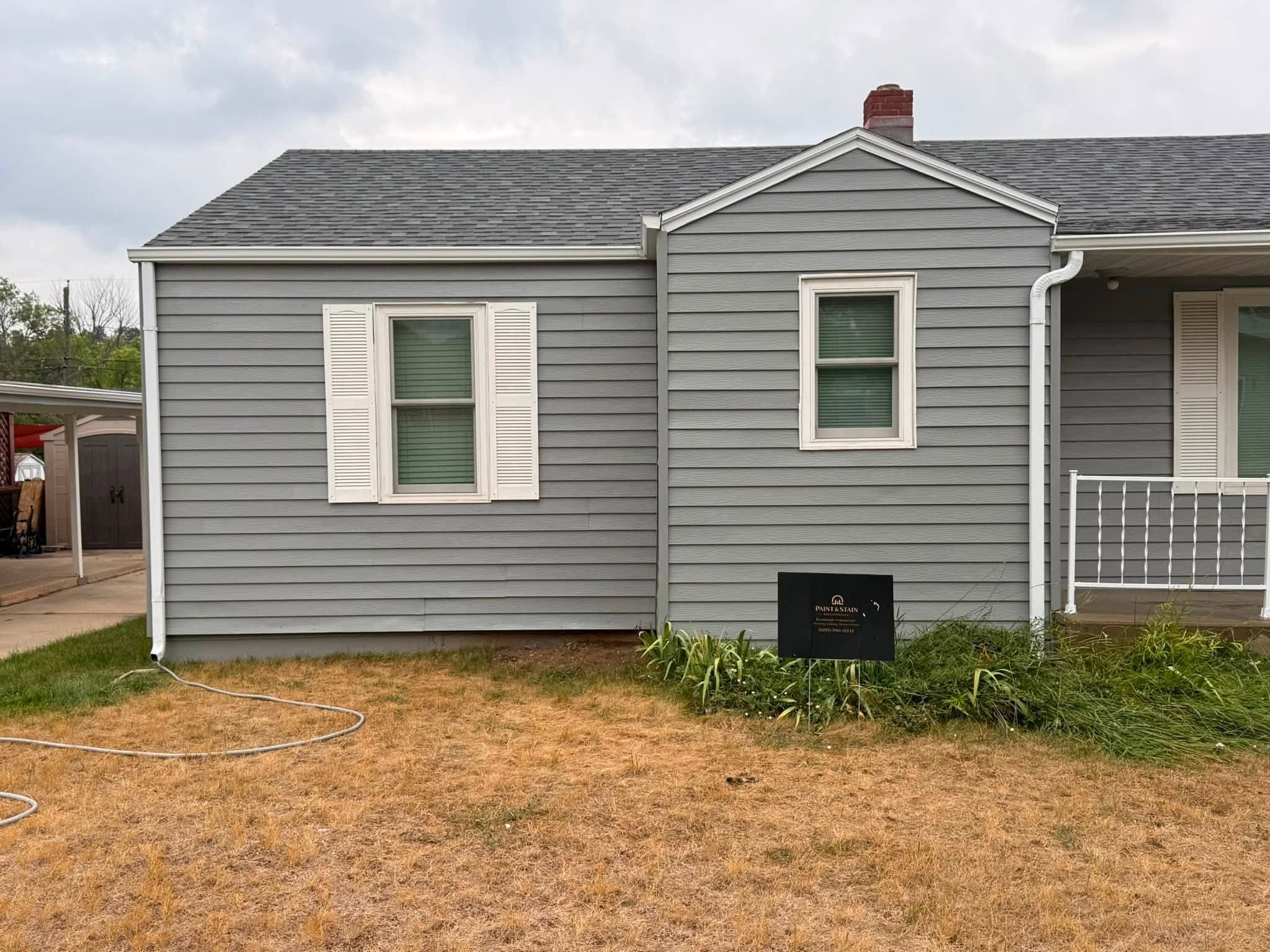
- Exterior siding, soffit and fascia
- Exterior trim, railings and entry doors
Rolling a wall is the quick part of an interior repaint. The time goes into the cut — the freehand line where the wall stops and the ceiling, the trim or the next color begins. Tape helps, but tape only holds a line on a surface it can seal against. Run it along a textured ceiling without sealing that edge first and the paint wicks underneath, which is how a taped line ends up looking worse than a brushed one.
Sheen is a decision, not a detail. Flat forgives an imperfect wall and burnishes wherever you scrub it; eggshell and satin wipe clean and throw every ridge and roller lap into relief under a window. It is completely normal for walls, ceilings and trim to be three different sheens in one room — and that is three separate cut-ins, not one.
Color changes are what people underestimate. Going light over a deep or saturated color is not a one-coat job, and a primer tinted toward the new color does more work than another gallon of finish would. Pricing it as a single coat doesn’t remove the second coat. It just moves it to a later visit.
Outside, everything depends on what the coating is being asked to stick to. Paint bonds to a clean, dry, sound surface and to nothing else: chalk, dust, mildew and any film already lifting have to be gone before a brush goes near it. Bare wood needs primer. Latex over an old glossy oil coating needs that gloss broken or a bonding primer under it, or it comes away later in sheets rather than flakes.
Weather sets the exterior schedule, and it is the surface temperature that matters, not the number on the forecast. A wall in full sun runs far hotter than the air — hot enough that the coating flashes off before it can level, which is what lap marks are. The same wall in shade at the end of the day can be under the minimum printed on the can, or wet with dew before the film has formed. Every product states its own limits, and an honest start date has the weather written into it.
The prep is the job
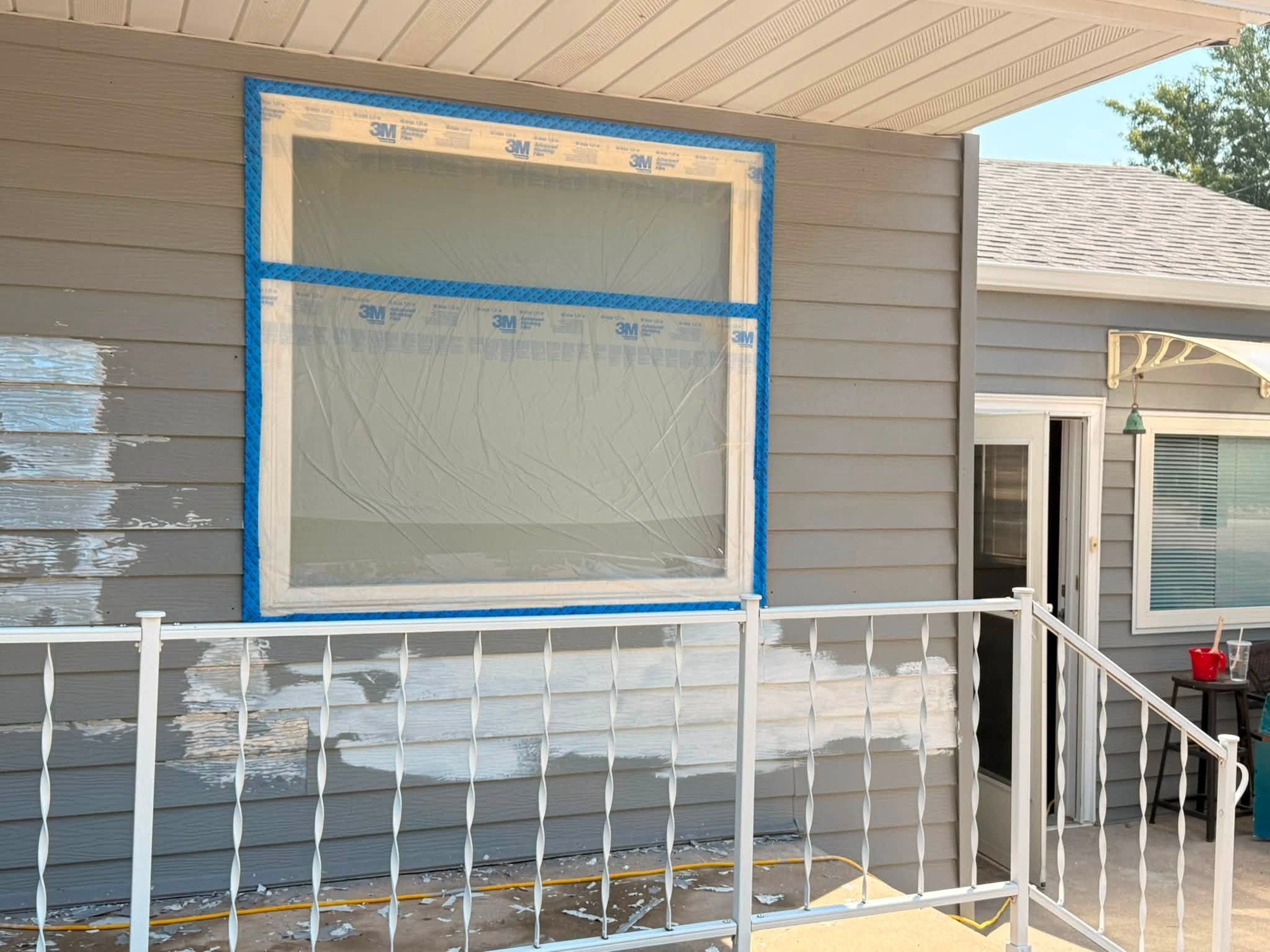
On a repaint, prep is not the thing before the work. It is most of the work, and every one of these is a decision made on your surfaces, in the light they actually get.
- Get it clean, or don’t bother
- Nothing bonds to grease above a range, dust along a baseboard, or the chalk that comes off old siding on your palm. What has to come off — and how — depends on what is under it, which is why it gets settled on the walkthrough rather than assumed from a photo.
- Fill, sand, then look again
- Filler shrinks as it dries. A hole that read dead flat while it was wet reads as a dimple under raking light for the life of the finish, so the second look — dry, with a light held flat against the wall — is part of the filling, not a bonus.
- Caulk the joints that move
- Trim to wall, mitres that have opened, and outside every joint where two materials meet. Indoors caulk is the difference between a crisp line and a ragged one. Outdoors it is what keeps water out of end grain. It is also the first thing to fail, so it gets looked at before it gets painted over.
- Prime what needs it
- Bare wood, fresh patches, anything glossy, and anything that will bleed through — water stains, tannin out of knots, smoke, marker. Fresh compound drinks paint differently from the wall around it, so an unprimed patch shows as a dull ghost through the color. Priming everything wastes a day; priming nothing earns a callback.
- Mask, cover, and agree where the color stops
- Floors, hardware, glass, fixtures, and the plants under an exterior wall. And the line itself: inside a closet, at a door casing, at an inside corner. Where a color stops should be a decision, not wherever the roller ran out.
What moves the schedule
Nobody can hand you a day count from a web page, and one offered without a single question attached is a guess. Here is what actually moves it:
- How much wall there is, and how high
- Square footage is the obvious half. Ceiling height is the other one — everything above a step ladder means staging, and staging means setting up and moving it before every cut rather than just walking to the next section.
- How many colors and sheens
- Each color and each sheen is its own cut-in, its own tray and its own clean-up. Two colors in a room is nowhere near twice the paint, but it is close to twice the cutting, and cutting is the slow part.
- The condition it is in now
- A sound wall is fast. A wall with a hundred nail holes, three failed patches and a glossy oil-painted trim set is a prep job with some painting at the end of it.
- Recoat windows
- Every product states how long to wait before the next coat, and pushing that traps water or solvent under the film — it stays soft, and soft finish marks. Dry to the touch is also not cured: a wall can be safe to close a door against long before it is hard enough to scrub or to push furniture against.
- Weather, on anything outside
- Surface temperature, dew point, wind carrying dust into a wet wall, and rain arriving inside the drying window. An exterior gets chased around the house to stay off the sunny side, and some days the honest call is not to open a can.
- Whether you are living in it
- An occupied house paints in stages: rooms cleared and put back, doors that have to close at night, pets who do not know where the wet edge is. It is slower than an empty house, and it should be scheduled as what it is.
What the estimate settles
Everything above is true of this work anywhere. These are the parts nobody can answer from a photograph on a screen — they get answered on your property, with the surface in front of both of you.
- How many coats this particular color change needs — on your walls, not in general.
- Which surfaces get primed, and with what kind of primer.
- The sheen for walls, for ceilings and for trim.
- Where each color stops, room by room.
- Outside: whether any wood or caulk has to be dealt with before a coating goes on at all.
- A date range with the weather written into it, and what happens to it if the week turns.
Free Estimates
Send a photo and two sentences about what you are looking at. That is enough to start the conversation — Manny comes to you across Rapid City and the Black Hills, so the next step is usually a walkthrough.
The other three
- Deck & Fence StainingDecks, rails, fences and gates — finishes for wood that lives outdoors all year.
- Drywall & TextureBoard, tape, coat, texture — and matching what is already there so a repair stops being visible.
- RemodelingBigger jobs, where finish work is only part of it — and where a written scope is what keeps it honest.