

Drywall & Texture
Drywall is a light problem more than a mud problem. A repair looks finished under a work lamp and tells the truth at eight in the morning with the blinds open.
- Free Estimates
- 5-Year Warranty
- Serving Rapid City & the Black Hills
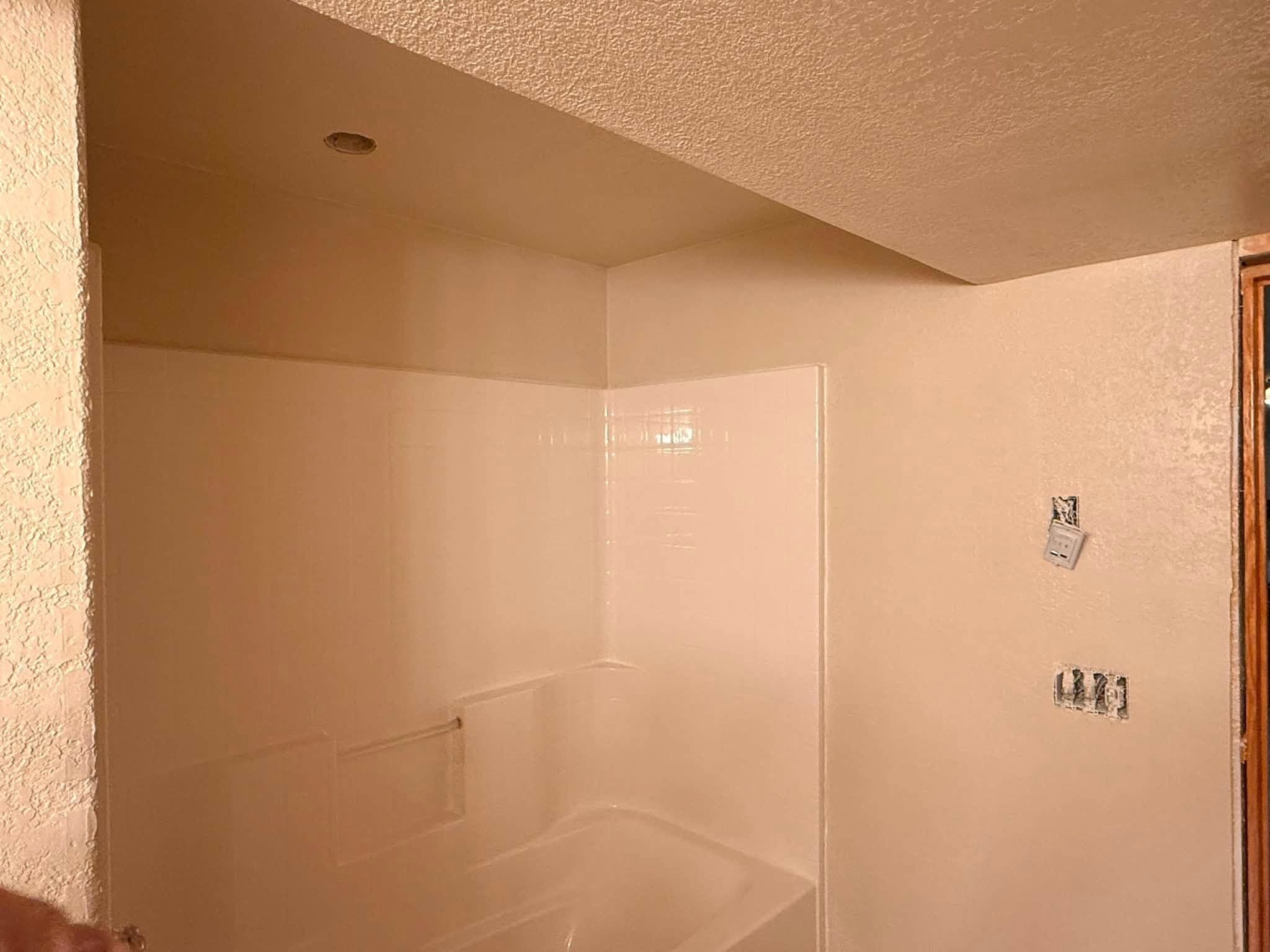
What the work involves
What’s in scope
- New board hung, taped and finished
- Patches and repairs once the cause is fixed
- Texture applied on new work
- Texture matched into an existing wall or ceiling
Hanging board is quick. Everything that makes a wall look flat happens afterwards, in coats of compound and in how they are sanded — and the only honest inspection is a light held flat against the surface, which throws every ridge and hollow into shadow.
Compound shrinks as it dries, back down into the seam. That is why a seam takes several coats and why each one goes on wider than the last. The goal is not thickness; it is a transition spread so far that the eye cannot find where it starts.
Factory-tapered board edges give you a shallow recess to fill, so a tapered seam can finish dead flat. A butt joint has no recess — the compound has to sit slightly proud of the board and be feathered much wider to disappear. That is why the seams you can pick out in a room are almost always butt joints, and why they take the longest.
Texture is a matching problem, not a menu. Knockdown, orange peel and hand-troweled finishes all vary with the mix, the pressure and how long you wait before the knockdown pass, so two people using the same word produce different walls. A patch in the middle of an existing texture gets matched by trying it on scrap until it reads right — never by naming it and hoping.
The trade describes how finished a drywall surface is in levels, running from taped-only up to a full skim coat across the whole surface. Which one a room needs is a lighting question: a big window, a sconce washing down a wall, or any paint with sheen in it will find every seam that flat paint in a dim hallway would have hidden.
And new or patched drywall has to be primed before finish paint, or it drinks the color differently from the wall around it and the repair reappears as a dull ghost through the paint. That is the seam between this work and the painting.
Most drywall failures are repeats
Which makes the first part of the work an investigation rather than a repair: why did the wall do this the first time, and is that thing still happening?
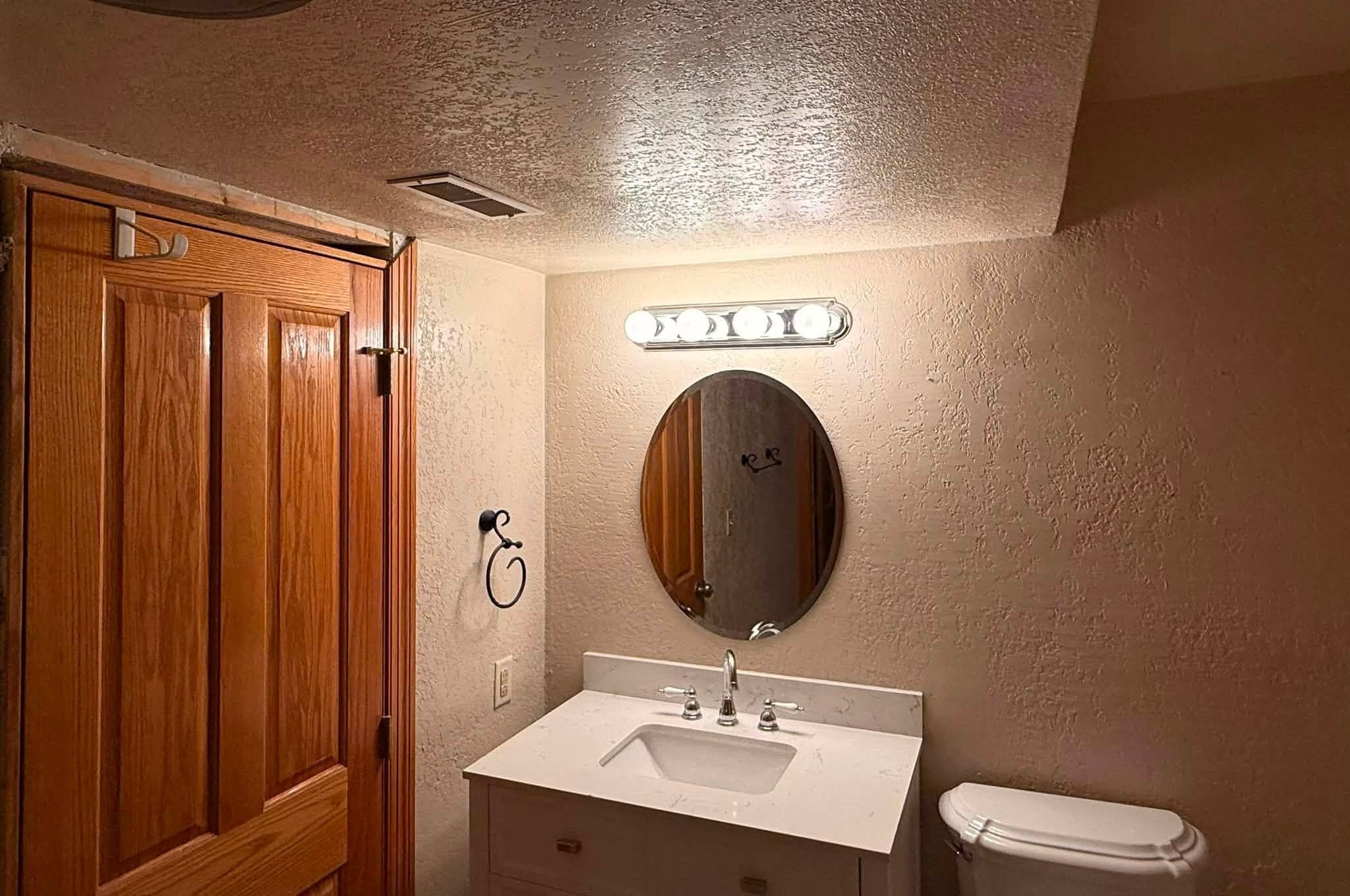
- Find the cause before the fix
- A crack that keeps coming back is movement or moisture, and compound is not a fix for either. If water was involved, the leak has to be fixed and the cavity has to be dry first — otherwise the repair is just a lid on the same problem.
- Cut back to sound board
- Soft, crumbling or delaminated board comes out. Compound spread over board that has already given up fails again in the same place, usually along the same line, and usually within the year.
- Give the patch something to hold
- A patch needs backing behind it. Without it the piece flexes every time the wall is bumped or the house moves, and a flexing patch cracks around its edges no matter how well the coats were feathered.
- Decide where the dust goes
- Sanding drywall is the dustiest thing that happens indoors and it travels further than anyone expects. Containment, the route in and out, and which rooms stay closed get settled before sanding starts. Afterwards is too late to have that conversation.
- Light it, then sand
- A work light held flat against the wall finds ridges at exactly the angle you will see them from once the furniture is back. Sanding without doing that is sanding by feel and hoping the room agrees.
What moves the schedule
Drywall is mostly waiting. The coats do not care what the calendar says, and these are the things that actually set the pace:
- Drying between coats
- Compound dries by giving up water. A cold room, a humid week or a coat put on too thick all stretch that out, and there is a limit to how much heat and air movement can honestly buy back.
- How many coats the seams need
- Tapered seams finish faster than butt joints. A room with a lot of butt joints is simply more days of coats, and no amount of skill compresses that.
- Texture matching
- Trial passes on scrap, dried, looked at, adjusted, tried again. That loop happens before anything goes near the wall, and it is time that does not look like progress while it is happening.
- Overhead work
- Ceilings are slower than walls at every stage, from lifting board to sanding it. They are also the surface most likely to need a fuller finish, because light crosses a ceiling at exactly the angle that shows seams.
- Whether the room is in use
- An occupied room means containment set up and taken down around each coat, and finishing where the furniture happens to be rather than where you would choose.
- What comes after it
- If painting follows, primer and paint have their own drying between them. Drywall being done is not the same as the room being done.
What the estimate settles
Everything above is true of this work anywhere. These are the parts nobody can answer from a photograph on a screen — they get answered on your property, with the surface in front of both of you.
- Patch, or skim the whole wall — on a large repair in a flat-lit wall the honest answer is often the whole wall.
- Whether the existing texture can be matched, or the surface should be taken to a clean stop line — a corner, a seam, an edge — and redone from there.
- How finished the surface needs to be for the light it gets and the paint going on it.
- Where the dust is contained and which rooms are closed off.
- Whether painting is part of the same job or a separate one.
Free Estimates
Send a photo and two sentences about what you are looking at. That is enough to start the conversation — Manny comes to you across Rapid City and the Black Hills, so the next step is usually a walkthrough.
The other three
- Interior & Exterior PaintingWalls, ceilings, trim, siding — everything the light lands on, inside and out.
- Deck & Fence StainingDecks, rails, fences and gates — finishes for wood that lives outdoors all year.
- RemodelingBigger jobs, where finish work is only part of it — and where a written scope is what keeps it honest.